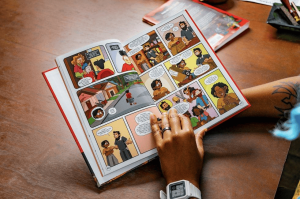
When people think about books, they often imagine pages filled with words. Graphic novels challenge that expectation by proving that illustrations can be just as powerful as dialogue.
Visual storytelling transforms every page into an emotional journey where art and narrative work together seamlessly.
Every Panel Tells a Story
Unlike films that move continuously, graphic novels rely on carefully arranged panels that allow readers to control the pace.
A silent panel can create suspense.
A wide landscape can emphasize isolation.
A close-up can reveal vulnerability.
Every artistic decision serves the narrative.
Readers become active participants, filling the spaces between panels with imagination and interpretation.
Color Creates Emotion
Color isn’t simply decorative—it shapes the reader’s emotional experience.
Warm colors often suggest comfort, hope, or passion.
Cool tones can evoke loneliness, mystery, or reflection.
Dark palettes build suspense, while bright palettes communicate optimism and energy.
Artists intentionally use color to guide emotional responses throughout the story.
Character Design Matters
Readers often connect with characters before reading their dialogue.
Facial expressions, posture, clothing, and movement all communicate personality.
A confident stance.
A hesitant glance.
A weary smile.
These visual cues make characters feel authentic and relatable.
Why Readers Remember Visual Stories
Psychologists have long recognized that people remember images more easily than text alone.
Graphic novels capitalize on this natural tendency by creating memorable scenes that linger in readers’ minds for years.
Many readers can vividly recall specific illustrated moments from their favorite graphic novels long after forgetting exact dialogue.
A Growing Literary Movement
Graphic novels continue earning respect across schools, libraries, and literary communities because they encourage literacy while appealing to diverse audiences.
Their ability to blend art and literature creates an experience unlike any other medium.
For creators, visual storytelling offers limitless opportunities to communicate complex emotions.
For readers, it offers an unforgettable journey.