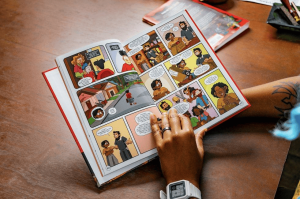
Some stories stay with readers because of their characters and the relationships they share. A friendship that develops unexpectedly or a disagreement between loved ones can make a story feel personal. Graphic novels explore these connections through situations that reflect everyday life. They show how people get to know one another and how their feelings change with time.
Relationships are not always easy. People have different personalities, expectations, and experiences. They sometimes struggle to express themselves or understand another person’s intentions. When graphic novels include these familiar challenges, their characters feel more natural. Readers become interested in their lives because they recognize something real in their experiences.
IN Rooftop Blues by Ethan Deal readers to explore themes of personal struggles and human connection. Its focus on relationships offers an opportunity to reflect on the importance of understanding others.
Relationships Begin with Small Moments
Meaningful relationships often begin in ordinary circumstances. A casual conversation may lead to friendship. Two strangers might discover a common interest. Someone may offer support during an unexpectedly difficult day.
These moments may seem insignificant at first, but they help establish a connection between characters. Readers begin noticing their personalities and how they respond to each other.
A believable relationship needs time to develop. Characters should have opportunities to become familiar with one another. Their conversations may grow more personal as they spend time together. Gradually, they begin understanding each other’s habits and feelings.
This natural development makes their connection more interesting. Readers can follow the relationship from its beginning and appreciate the experiences that bring the characters closer.
Trust Makes Character Connections Meaningful
Trust plays an important role in every relationship. Some people find it easy to open up, while others need time before sharing personal feelings. These differences can make relationships in graphic novels more realistic.
A character with a difficult past may hesitate to accept someone’s friendship. Another might struggle to ask for help because they are uncomfortable depending on others.
Trust develops through everyday actions. A character may keep a promise or offer reassurance during an uncomfortable situation. Someone might listen patiently when another person needs to talk.
Such gestures reveal genuine concern. They also help readers understand why one character begins feeling comfortable around another.
However, trust can also be damaged. A misunderstanding or broken promise may create distance between people. Exploring these situations gives fictional relationships greater depth.
Why Conflict Makes Relationships More Realistic
Disagreements are part of human relationships. Friends occasionally argue over personal decisions. Family members may have different expectations. Even people who care deeply about each other can struggle to communicate.
Graphic novels become more believable when they acknowledge these difficulties. Relationships without disagreements may appear too perfect to reflect real life.
Conflict also reveals important details about a character’s personality. Someone might become defensive during an argument. Another may avoid confrontation because they fear losing an important relationship.
Sometimes both characters have reasonable opinions. They simply view the situation differently.
Readers become curious about how these disagreements will affect the relationship. They want to know whether the characters can understand each other’s concerns or accept responsibility for their actions.
The resolution does not always need to be immediate. Some problems require patience and difficult conversations. Allowing characters to work through these challenges makes their relationships more convincing.
Characters Should Influence Each Other’s Growth
The people in our lives often influence our decisions and behavior. Friendships can encourage confidence. Family relationships may teach responsibility. Personal experiences with others can also change how someone approaches difficult situations.
Graphic novels can explore these changes through character relationships. A reserved individual may gradually become more comfortable expressing feelings. Someone with a stubborn personality might begin considering another person’s perspective.
Such changes become believable when they happen naturally. Characters should learn from their experiences without completely losing their individual personalities.
Relationships can also influence both people involved. One character may provide emotional support, while another encourages greater independence.
This development makes the connection meaningful. Readers see how shared experiences affect individual lives and contribute to personal growth.
Imperfect Characters Create Stronger Connections
Real people make mistakes. They sometimes speak without thinking or misunderstand someone’s intentions. Even kind individuals can behave selfishly during stressful situations.
Including these imperfections helps fictional characters feel more human. Readers do not expect every character to make the right decision.
A friend might fail to recognize another person’s difficulties. Someone may avoid an important conversation because they fear the outcome. These situations create opportunities for characters to acknowledge their mistakes.
Forgiveness and understanding can become important parts of their relationships. However, not every disagreement disappears after an apology.
Characters may need time to rebuild trust or accept that certain differences remain unresolved.
These experiences reflect the complications of everyday relationships. They make characters easier to understand without requiring readers to agree with every decision.
Why Believable Relationships Matter to Readers
Readers often remember relationships that remind them of their own experiences. An unexpected friendship may bring back a personal memory. A difficult conversation might reflect something familiar from everyday life.
These connections make stories more engaging. Readers begin caring about what happens to the characters because their feelings seem genuine.
Final Thoughts
Believable relationships give graphic novels emotional depth. Everyday interactions establish connections. Trust strengthens them, while disagreements reveal their challenges. Personal growth adds meaning to the experiences characters share.
The relationships readers remember most are rarely perfect. They feel genuine because they reflect the difficulties and rewards of connecting with another person.
Explore Rooftop Blues by Ethan Deal and discover a graphic novel that brings human experiences, personal struggles, and meaningful connections into focus.