Have you ever opened a book, planning to read just a page or two, only to find yourself turning page after page? You forget about the time, the things you need to do, and everything happening around you. All you want to know is what comes next.
That’s what a good beginning can do. And surprisingly, it doesn’t take a dramatic twist or a shocking event to pull readers into a story. Sometimes, all it takes is an interesting character, a strange encounter, or a moment that feels a little too familiar.
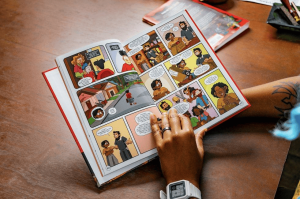
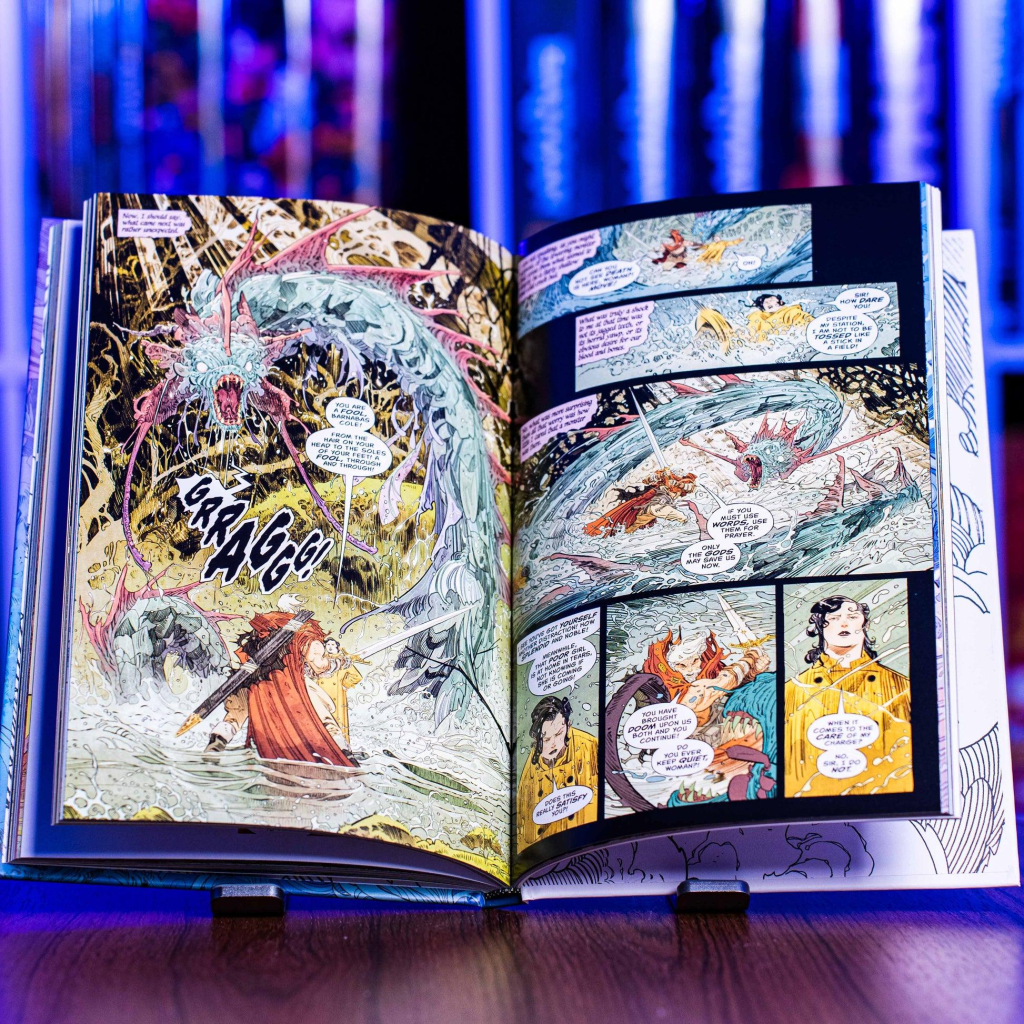
Graphic novels have their own way of making those opening moments memorable. Rooftop Blues by Ethan Deal explores personal struggles and human experiences, offering readers a story that goes beyond the adventures often associated with graphic storytelling.
The First Page Is More Important Than You Think
Think about a book you couldn’t put down. Chances are, something caught your attention early on. Maybe you liked the main character. Perhaps something unexpected happened, and you needed to know why.
That’s exactly what a graphic novel’s opening should do. It should make you curious enough to turn the page.
But here’s the thing. A great beginning doesn’t have to explain everything. In fact, revealing too much can take away some of the fun.
Imagine opening a story where someone is sitting alone at a café, staring at an empty chair. They’ve ordered two coffees, but nobody else arrives.
You immediately start wondering who was supposed to be there. Did something happen? Were they stood up?
And just like that, you’re interested.
A Little Mystery Goes a Long Way
Nobody wants to know how a story ends before they’ve had a chance to enjoy it. Half the fun of reading is figuring things out along the way.
Graphic novels can spark that curiosity with the simplest situations. Maybe someone gets a message from someone they haven’t spoken to in years. Perhaps a character notices something strange about a familiar place.
You don’t need all the answers right away. You just need a reason to keep reading.
Of course, there’s a fine line between mystery and confusion. If readers can’t make sense of anything, they’re more likely to lose interest.
The trick is to give them enough to follow the story while leaving a few questions unanswered.
After all, isn’t wondering what happens next part of what makes reading enjoyable?
Characters Can Win Readers Over Immediately
Sometimes, the plot doesn’t hook you. It’s a character you feel like you’ve known forever, even though you’ve only just met them.
Maybe they’re sarcastic when things go wrong. Maybe they try to act brave but can’t quite hide their nerves. Or perhaps they’re the quiet type who notices everything but rarely says a word.
Little things like these can tell readers more about a character than a long introduction ever could.
Think about someone who laughs at the worst possible moment. It’s a tiny detail, but it makes you wonder what kind of person they are.
And that’s often how a connection begins.
You don’t have to love a character immediately, either. Sometimes, the ones who frustrate you or make questionable decisions are the most interesting to follow.
What matters is that they feel like someone worth getting to know.
Every Story Deserves the Right Beginning
Imagine picking up a heartfelt story about friendship and finding an enormous action sequence on the first page. It might look exciting, but would it really prepare you for the story ahead?
Probably not.
Every graphic novel has its own personality, and its opening should reflect that.
A mystery might start with something that doesn’t quite add up. A romance could begin with an embarrassing encounter. A story about personal struggles might open with someone having a particularly difficult morning.
None of these beginnings needs to be loud or dramatic.
Sometimes, watching a character struggle to find the right words is more interesting than seeing them escape a dangerous situation.
Readers want a beginning that feels natural. Something that gives them a glimpse of the world they’re entering without trying too hard to impress them.
Because once they’re interested in that world, they’ll want to spend more time there.
Sometimes the Smallest Details Matter Most
Have you ever noticed something in the first few pages of a book and thought nothing of it, only to realize later that it mattered?
That’s one of the most satisfying parts of a good story.
Maybe a character keeps looking at an old photograph. Someone changes the subject whenever a certain name comes up. Or a person pauses outside a house before finally knocking on the door.
These moments might not seem important at first.
But they make you wonder. What’s in that photograph? Why won’t anyone talk about that person? What makes walking through that door so difficult?
And when the answers finally come, those little details suddenly mean so much more.
It’s the kind of storytelling that makes readers want to go back and see what else they might have missed.
A Great Opening Makes Readers Want More
Getting someone’s attention on the first page is one thing. Keeping it is another.
We’ve all come across stories that start brilliantly but lose their charm after a few chapters. The exciting mystery goes nowhere, or the character who seemed fascinating at first never really develops.
A strong beginning should lead to something worthwhile.
If a character is struggling with a difficult decision, readers want to see how that choice affects their life. If something unusual happens, they want to understand why it matters.
And sometimes, the best part comes much later, when you suddenly remember a small moment from the opening and realize what it was trying to tell you.
That’s when a story really stays with you.
It gives you something to think about even after you’ve closed the book.
Final Thoughts
There’s no single formula for a perfect first page. Some graphic novels grab your attention with action, while others draw you in through ordinary moments that feel surprisingly personal.
What makes the difference is that little spark of curiosity. You meet someone interesting, notice something unusual, or find yourself wondering how a situation will turn out.
Before you know it, you’ve read far more than you planned.
If you enjoy graphic novels that explore human emotions, personal experiences, and the unexpected turns life can take, Rooftop Blues by Ethan Deal is worth adding to your reading list.