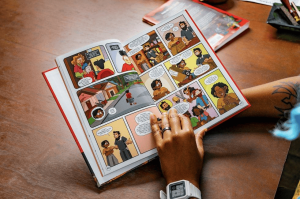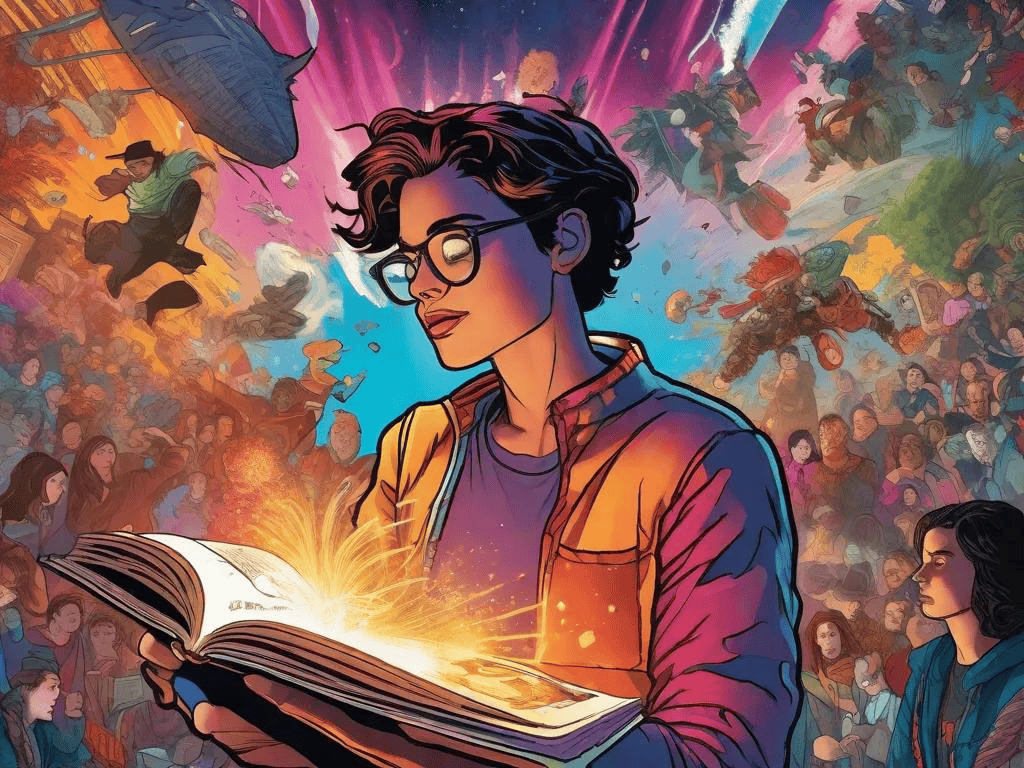
Stories can appear in many different forms. Some stories depend mainly on words. Other forms use music, movement, or performance to create an experience. Graphic novels combine two forms of communication. Those forms are written storytelling and visual art.
This combination gives readers a different way to experience a story. Readers do not receive every detail through narration. Instead, they observe characters, settings, expressions, and visual details. Connections form between what they see and what they read. This approach makes reading more active and personal.
Stories Told Through More Than Words
Words can explain what a character thinks or feels. Images can show those emotions without direct description. A character’s expression may reveal fear. A change in posture may suggest sadness. A crowded background can create tension. Even simple changes in lighting can influence the mood of a scene.
Graphic novels allow these details to work together. Readers do not need to depend entirely on written explanations. Visual clues can reveal important parts of the story.
The Importance of Every Panel
Each panel contributes something to the larger narrative. A close-up can focus attention on a character’s reaction. A wide image can establish a new location. Several small panels can slow down an important moment. A large panel can make an event feel more significant.
The arrangement of panels also affects how readers move through the story. The page itself becomes part of the storytelling process. Readers are not simply moving from one paragraph to another. Their attention moves through a carefully designed sequence of images and words.
Readers Become Part of the Story
Graphic novels often leave room for interpretation. An artist may show a character looking toward something without explaining the character’s thoughts. A scene may end without a clear answer. A visual symbol may appear several times before its meaning becomes clear. These choices encourage readers to think.
Questions begin to form in their minds.
- What does this expression mean?
- Why was this image included?
- What happened between these two panels?
That involvement can make the reading experience more memorable. Readers actively participate in understanding the story.
Visual Details Can Carry Hidden Meaning
A graphic novel can communicate ideas through small details. Objects can represent memories. Colors can create a particular mood. Repeated images can connect different parts of a story. Changes in a character’s surroundings can show personal development.
These details may not receive direct explanation. Readers discover them naturally as they move through the pages. This process creates another layer of storytelling. A graphic novel can tell its main story through words. Visual choices can communicate additional meaning.
Silence Can Speak Loudly
Not every important moment needs dialogue. Sometimes a silent panel can communicate more than a long conversation. A character sitting alone may reveal loneliness. An empty room may suggest absence. Two characters can stand together without speaking. Their silence may show tension or emotional distance.
Silence gives readers time to observe. An image can remain in their minds without an immediate shift to another piece of dialogue. This quality allows graphic novels to create powerful emotional moments. Readers can experience those moments without being given direct instructions on what to feel.
Different Readers Can Notice Different Things
One reader may focus on the characters. Another may notice the artwork. Someone else may pay attention to the setting or recurring visual symbols. There is no single way to experience a graphic novel.
The same page can create different reactions for different readers. Personal experiences can influence those reactions. Individual perspectives can shape interpretation. This flexibility gives graphic novels a unique quality. They provide information while leaving space for personal interpretation.
A Creative Balance Between Art and Story
Graphic novels succeed when words and images support each other. The writing moves the story forward. The artwork adds atmosphere and emotion. Panel layouts control pacing. Facial expressions reveal reactions.
Background details create context.No single element has to carry the entire story alone.
Together, these elements create a complete reading experience. This balance makes graphic novels different from many other storytelling formats.
Final Thoughts
Graphic novels invite readers to experience stories from multiple perspectives. Written language carries important information. Visual details add another layer of meaning. Emotions, ideas, and events can develop through words and images. The result is a form of storytelling that encourages readers to observe, interpret, and imagine.
Sometimes, a reader discovers something without being told. That discovery can become the most memorable part of the story.
Readers who enjoy stories about emotion and connection may find something in Rooftop Blues by Ethan Deal.